Challenge
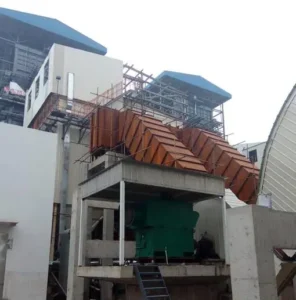
A newly built environmental protection plant in Zhejiang, China, needed reliable starting for its process fan loads. Large fans started directly across the line typically draw 6–8× full-load current, which stresses the electrical network and causes mechanical shock to fan bearings, belts and ductwork. Because the facility must keep its ventilation and exhaust processes running continuously, the project team selected a built-in bypass soft starter at the design stage to keep starting current and mechanical stress under control from day one.
Solution
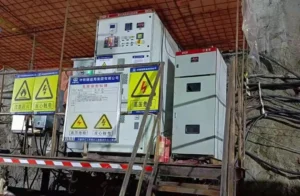
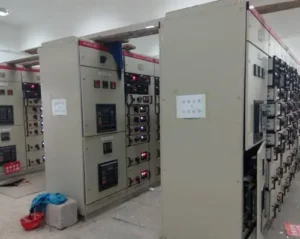
We supplied a Xichi CMC-MX built-in bypass soft starter for the plant’s fan loads. The CMC-MX is a low-voltage (380 V class) soft starter with an integrated bypass contactor, so after a smooth start the motor transfers automatically to line power — no extra bypass cabinet is needed and running losses through the thyristors are avoided.
- Initial voltage 40% — soft, low-shock start for the fans
- Current limit 350% Ie — starting current held to 3.5× rated
- Ramp time 15 s — gradual, controlled acceleration
The starter was delivered, installed and commissioned as part of the new plant construction. For the full low voltage soft starter range, see our product page.
Results
- Starting current held to 3.5× rated (350% Ie setting) — inrush controlled
- Smooth 15-second ramp with 40% initial voltage — reduced mechanical shock on fan bearings and ductwork
- Built-in bypass design — automatic transfer to line power after start, no separate bypass cabinet
- Continuous operation support for the plant’s ventilation and exhaust processes
Factory acceptance testing (FAT) was completed before shipment; site commissioning records are available under a non-disclosure agreement (NDA).
FAQ
What is a built-in bypass soft starter?
A built-in bypass soft starter is a low-voltage soft starter with the bypass contactor integrated inside the same enclosure. The starter ramps voltage to the motor during start, then automatically transfers the motor to line power through the internal bypass — removing thyristor losses during continuous running and eliminating the need for a separate bypass cabinet.
Why use a soft starter for fan applications?
Fans started directly across the line can draw 6–8 times full-load current, causing voltage dips on the supply and mechanical shock to bearings, belts and ductwork. A soft starter limits starting current and ramps voltage smoothly, protecting both the electrical network and the mechanical system.
What does the 350% Ie current limit mean?
Ie is the motor’s rated current. A 350% Ie limit means starting current is held at 3.5 times the rated current instead of the 6–8 times typical of direct-on-line starting. In this project the setting was 350% Ie with a 15-second ramp and 40% initial voltage.
Soft starter vs VFD: which is right for a fan?
If the fan runs at constant speed and only needs controlled starting, a soft starter is the lower-cost choice and solves inrush, voltage drop and mechanical-shock problems. If the process needs variable flow control, a VFD is required but costs significantly more. This project’s fan duty was constant-speed, so a soft starter was the right fit. See our soft starter vs VFD comparisons for more detail.
Does the CMC-MX series support remote monitoring / RS485?
For remote monitoring and control options on the CMC-MX, confirm the available communication interface (e.g., RS485 / Modbus) with our sales engineer — it will be specified in your quotation.
What certifications are available for the CMC-MX soft starter?
Export documentation typically includes CE and ISO9001. For project-specific requirements, send us your destination country and specifications and we will provide a certification compliance list.